

- Corporate governance is a system of rules, practices, and processes by which a company is directed and controlled. It encompasses the relationships between a company’s management, its board of directors, its shareholders, and other stakeholders, such as employees, customers, suppliers, and the community.
The primary goal of corporate governance is to ensure that a company is managed
Key Principles of Corporate Governance
Good corporate governance is built on a foundation of several core principles:
- Accountability: The board of directors and management are held responsible for their actions and decisions. They must be able to justify their choices to shareholders and stakeholders.
- Fairness: This principle emphasizes the equitable treatment of all stakeholders, including minority shareholders. Decisions should be made impartially, and all stakeholders should have opportunities to voice their concerns.
- Transparency: Companies must provide clear, timely, and accurate disclosure of all material matters, including their financial situation, performance, and governance practices. Transparency builds trust and confidence among investors and the public.
- Responsibility: The board of directors has a duty to act in the best interests of the company and its stakeholders. This includes acting ethically and making decisions that are sustainable and beneficial to all involved.
- Risk Management: A robust governance framework includes a system for identifying, evaluating, and mitigating risks that could threaten the company’s assets, reputation, and success.
Importance of Corporate Governance
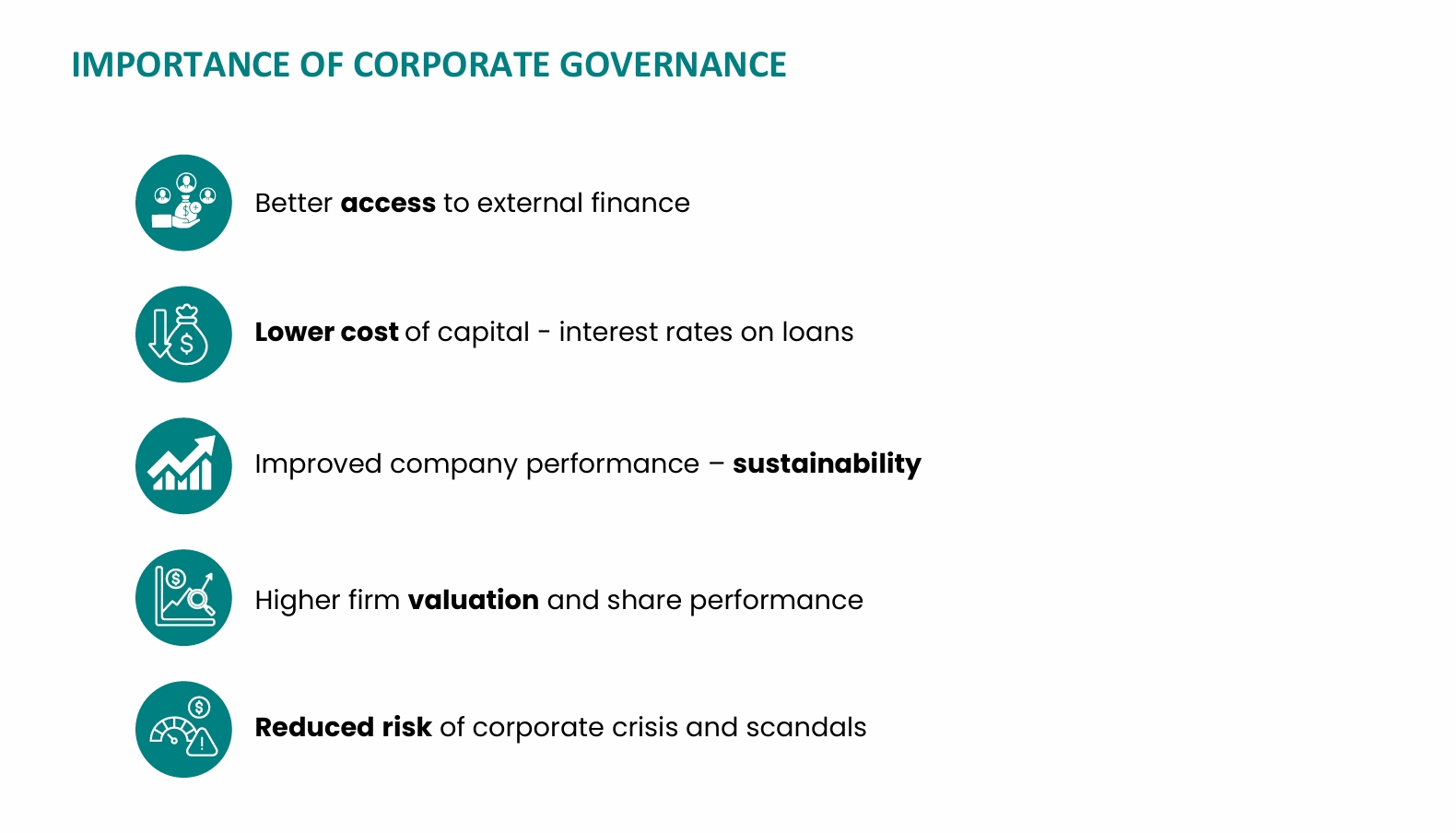
Implementing good corporate governance practices is crucial for the success and sustainability of an organization. It provides numerous benefits, including:
- Enhanced Investor Confidence: Transparent and accountable governance practices build trust with investors, making a company more attractive for investment and potentially lowering its cost of capital.
- Improved Performance: Clearly defined roles and responsibilities, along with effective oversight, can lead to higher productivity and better decision-making, ultimately boosting a company’s profitability.
- Risk Mitigation: Good governance helps to prevent fraud, mismanagement, and corporate scandals. It provides a structured approach to identifying and addressing potential threats, whether financial, operational, or reputational.
- Legal and Regulatory Compliance: A strong governance framework ensures a company adheres to all applicable laws and regulations, reducing the risk of fines, lawsuits, and legal penalties.
- Stronger Corporate Reputation: Companies with a reputation for ethical behavior and transparency often enjoy greater customer loyalty, better relationships with regulators, and a more positive public image.
Corporate Governance Best Practices
To ensure a robust and effective governance system, companies often adopt a number of best practices:
- Diverse and Independent Board: A board of directors with a mix of skills, backgrounds, and experiences promotes a wider range of perspectives and more objective decision-making. Having a majority of independent directors helps ensure the board can provide unbiased oversight of management.
- Clear Roles and Responsibilities: The roles and duties of the board, management, and committees should be clearly defined to ensure accountability and minimize conflicts of interest.
- Ethical Code of Conduct: Establishing a strong ethical framework and a code of conduct for all employees sets the tone for a culture of integrity throughout the organization.
- Effective Risk Management: Boards should have a proactive approach to risk management, regularly reviewing and updating risk frameworks to identify emerging threats and opportunities.
- Transparent Reporting: Companies should maintain robust accounting practices and provide accurate, timely, and transparent financial reporting to maintain investor confidence.
- Shareholder Engagement: Companies should engage with their shareholders and provide them with the necessary information to exercise their rights, such as voting on important corporate matters.
WHAT CORPORATE GOVERNANCE IS NOT
Corporate Governance ≠ Corporate / Financial Management
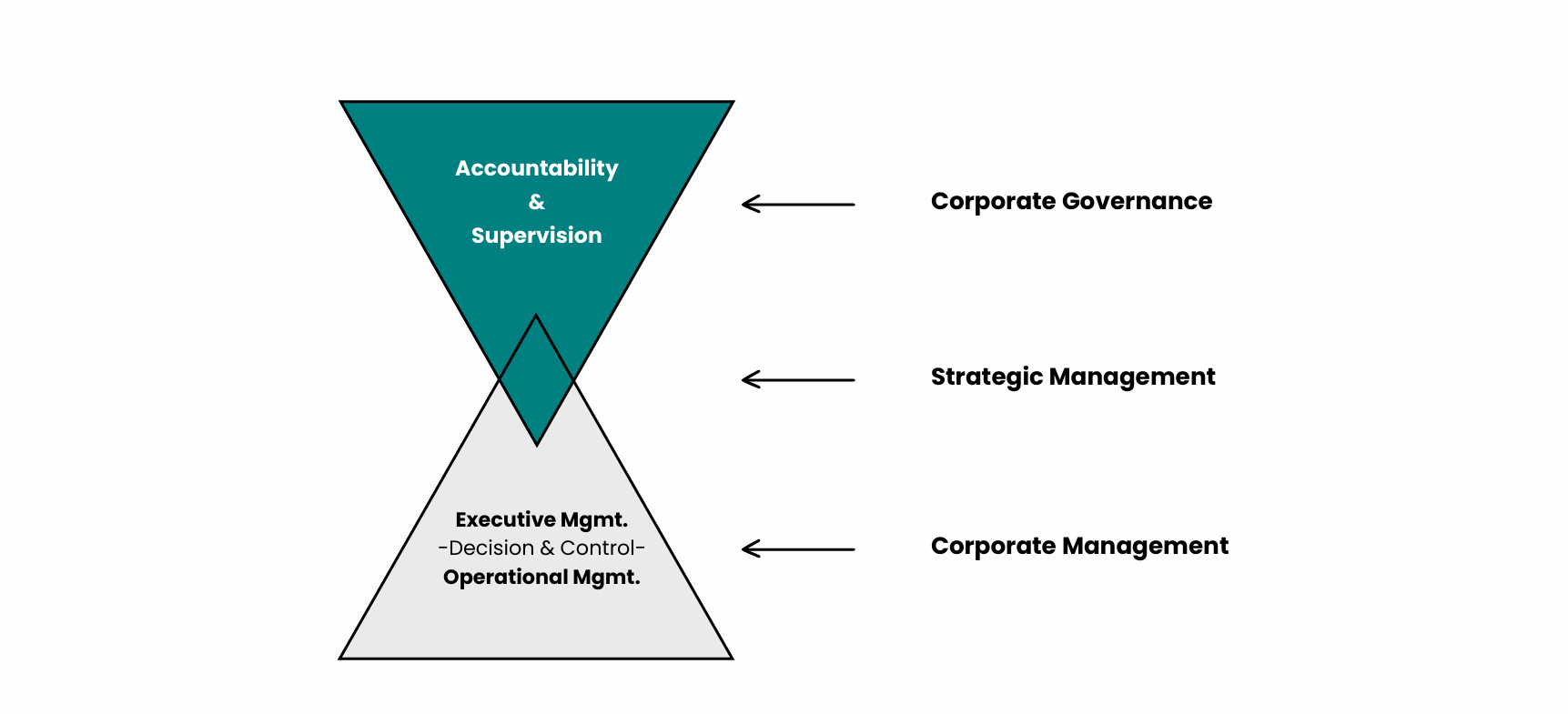
Corporate Governance ≠ Corporate Social Responsibility or Business EthicsCORPORATE GOVERNANCE VS CORPORATE MANAGEMENT
WHY IS CORPORATE GOVERNANCE IMPORTANT?
PILLARS OF CORPORATE GOVERNANCE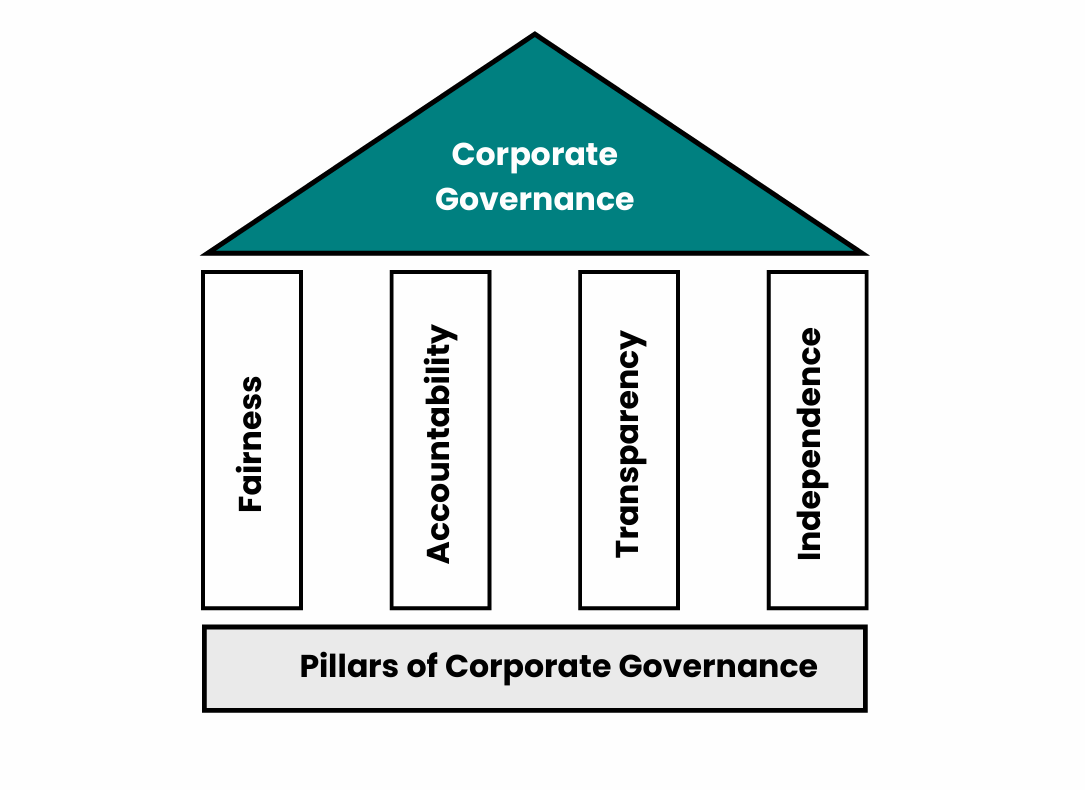
Corporate governance is a system of rules, practices, and processes that directs and controls a company. The “pillars” of corporate governance are the fundamental principles that guide this system. Here is a more detailed look at the four core pillars:
1. Transparency
Transparency is the principle of open and clear communication about a company’s activities and performance. It ensures that stakeholders have access to accurate and timely information, which is essential for making informed decisions.
Financial Reporting: This involves clear and honest disclosure of a company’s financial statements, including income statements, balance sheets, and cash flow statements. This is crucial for investors to assess the company’s financial health.
Disclosure of Policies: Companies should be transparent about their internal policies, such as executive compensation, risk management strategies, and environmental and social initiatives (ESG).
Open Communication: Transparency also means open and regular communication with stakeholders, including shareholders, employees, and the public, about the company’s strategy, challenges, and successes.
2. Accountability
Accountability refers to the obligation of the board of directors and senior management to answer for their actions and decisions. It is the mechanism that ensures those in power are held responsible for how they manage the company.
Board Oversight: The board of directors is accountable to the shareholders for overseeing the company’s activities, setting strategic objectives, and monitoring the performance of senior management.
Clear Responsibilities: A clear delineation of roles and responsibilities for all individuals within the company is essential for accountability. This ensures that when an issue arises, the responsible parties can be identified and held to account.
Performance Metrics: Accountability is often measured through performance metrics, which track how well the company is achieving its goals and how effectively its resources are being used.
3. Fairness
Fairness is the principle that a company should treat all of its stakeholders equitably. This includes ensuring that the rights of all individuals and groups are respected and that no single group is given undue advantage.
Shareholder Rights: All shareholders, regardless of the size of their investment, should be treated fairly. This includes equal access to information and the right to vote on key corporate decisions.
Stakeholder Interests: Fairness extends beyond shareholders to include employees, customers, suppliers, and the community. Corporate decisions should consider the impact on all these groups and aim to balance their interests.
Impartial Decision-Making: The board and management must make decisions impartially, without favoritism, and based on the best interests of the company and its stakeholders.
4. Responsibility
Responsibility in corporate governance is about recognizing and acting on the company’s duties to all its stakeholders. It is the principle that guides a company to act ethically and sustainably.
Fiduciary Duty: The board has a legal and ethical responsibility to act in the best interests of the company and its shareholders. This means prioritizing the long-term health and value of the company over short-term gains.
Ethical Conduct: Responsibility involves promoting a culture of integrity and ethical behavior throughout the organization. This includes establishing a clear code of conduct and whistleblowing policies.
Corporate Social Responsibility (CSR): This pillar increasingly includes a company’s responsibility to consider its environmental and social impact. Sustainable practices and a commitment to being a good corporate citizen are now seen as a vital part of good governance.